Pay Per Click Advertising, PPC, SEA, and Search Engine Advertising are different names for the same concept. But what does it actually mean?
PPC advertising is an online advertising model that allows you to place ads on search engine results pages (SERPs – Search Engine Results Pages), social networks, and other websites. With PPC, advertisers bid on keywords (which go to auction) and only pay when a user clicks on the ad. When users click a PPC ad, they are directed to a landing page on the advertiser’s website.
In other words, PPC is an advertising model in which advertisers pay each time a user clicks on one of their online ads.
There are different PPC ad types, but one of the most common is the paid search ad. These ads appear when people search online using a search engine like Google—especially when they are performing commercial searches (meaning they are looking to buy something). It can be a mobile or desktop search, a product search, or a local service query—like “sushi near me,” “hairdresser,” “plumber,” or “flowers for mother’s day.” All of these searches can trigger pay-per-click ads.
In pay-per-click advertising, ad platforms charge advertisers only when a user clicks on their ad—hence the name “pay-per-click”.
Other forms of PPC advertising exist as well, such as Display Ads (typically banners) and Remarketing.
PPC is good for everyone involved
-
It’s good for searchers – People click on paid search ads more often than many other digital ad formats, and they don’t mind ads as long as the products or services are relevant to what they’re looking for. Search engines also work hard to ensure paid results match user intent.
-
It’s good for advertisers – PPC gives advertisers a unique way to present a message to people who are actively searching for a solution. Because users reveal intent through their queries, advertisers can measure traffic quality and performance more clearly.
-
It’s good for search engines – PPC helps search engines serve users and advertisers at the same time: relevant results for users and a highly targeted advertising channel that generates revenue.
PPC can have a major (and positive) impact on most businesses and brands. If you’re not doing PPC, you may be missing out on valuable traffic and revenue.
What are the advantages of PPC?
-
Speed
-
PPC is measurable and trackable
-
Costs — you only pay when someone clicks
-
Less dependent on SEO
-
Advanced segmentation options
1. Speed
With PPC, you can get results fast.
Once you have the key assets ready (ad copy and landing page), you can launch quickly—no contracts or lengthy negotiations. You set it up and go.
You’ll often see results soon after the campaign goes live, which contrasts with SEO efforts that typically take longer to build momentum and organic visibility.
Unlike channels such as email or organic social, PPC allows you to reach people beyond your existing followers or customer lists—helping you find new prospects as well as reach current customers.
Most work within the PPC platform—from research to campaign setup and ad copywriting—can be done with minimal dependency on development teams, though conversion tracking and landing page selection remain essential.
2. PPC is measurable and trackable
Everything in PPC is measurable—from what you pay to the traffic and conversions you generate. This makes PPC a strong channel for testing campaigns, strategies, and landing pages (A/B testing), and for learning what your customers are actually looking for.
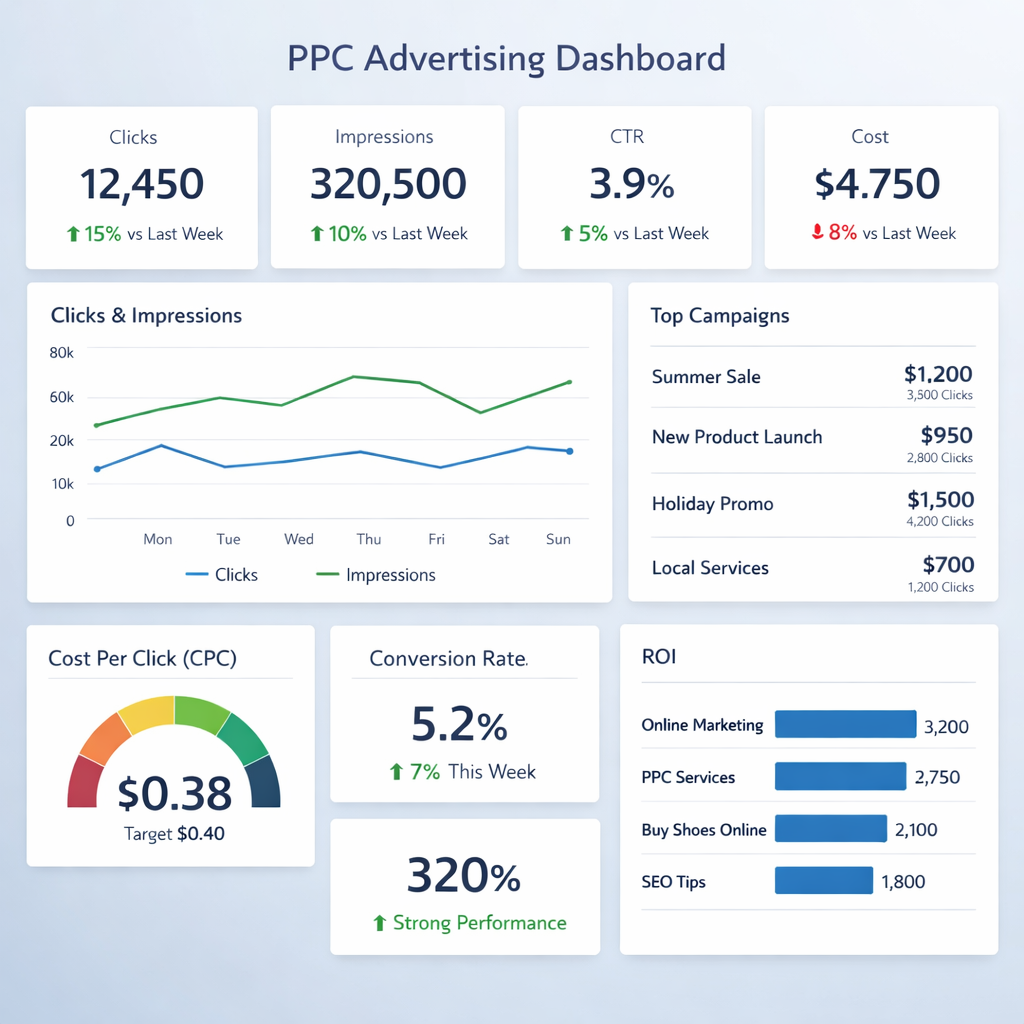
By combining Google Ads with Google Analytics, you can monitor performance at a high level, including impressions, clicks, and conversions (based on your business goals).
There’s no mystery in PPC: the statistics are available and show exactly how your campaigns are performing and what results they deliver.
3. Costs — only pay when someone clicks
In many advertising models, you pay the same amount regardless of whether people interact with your ad. With PPC, you pay per click, meaning you only pay when someone engages with your ad—giving them a chance to convert.
Also, Google (and other ad networks) don’t reward only the highest bidder. They also reward high-quality ads (i.e., ads that perform well for users). Better performance often leads to higher click-through rates and lower costs.
You can start with a small investment. In PPC, there is no cost until someone clicks. You decide how much to spend per campaign—although the more you invest (and optimize well), the greater your potential results.
4. Not too dependent on SEO
If your website doesn’t rank highly in organic search, PPC can still help you get visibility.
This is one of the biggest benefits of PPC, especially for startups and smaller businesses: you can compete for customers even against established brands.
If you’re not experienced in SEO yet, PPC can be the perfect short-term solution while you build long-term organic growth. And even if your site isn’t fully optimized for SEO, PPC can still drive traffic without relying on search engines’ organic ranking criteria.
5. Advanced segmentation options
Reaching the right audience can be difficult, but PPC allows for highly specific targeting.
You can control when ads appear and ensure they reach people who are most likely to be interested. You can target by keywords (based on what potential customers search for), and also by demographics, interests, and online behavior.
With remarketing, you can show ads to people who visited your site recently but didn’t buy—helping you re-engage warm audiences and drive more conversions.
Conclusion
PPC advertising has proven to be a reliable and profitable channel for B2B, B2C, non-profit organisations, and other businesses looking for fast, high-quality traffic and conversions.
Considering all the benefits PPC offers, there’s little risk in testing it.
At Link37, we have an expert PPC Advertising team that can help you. Anyone can do PPC, but few do it well. We have experience and know-how. Get in touch!