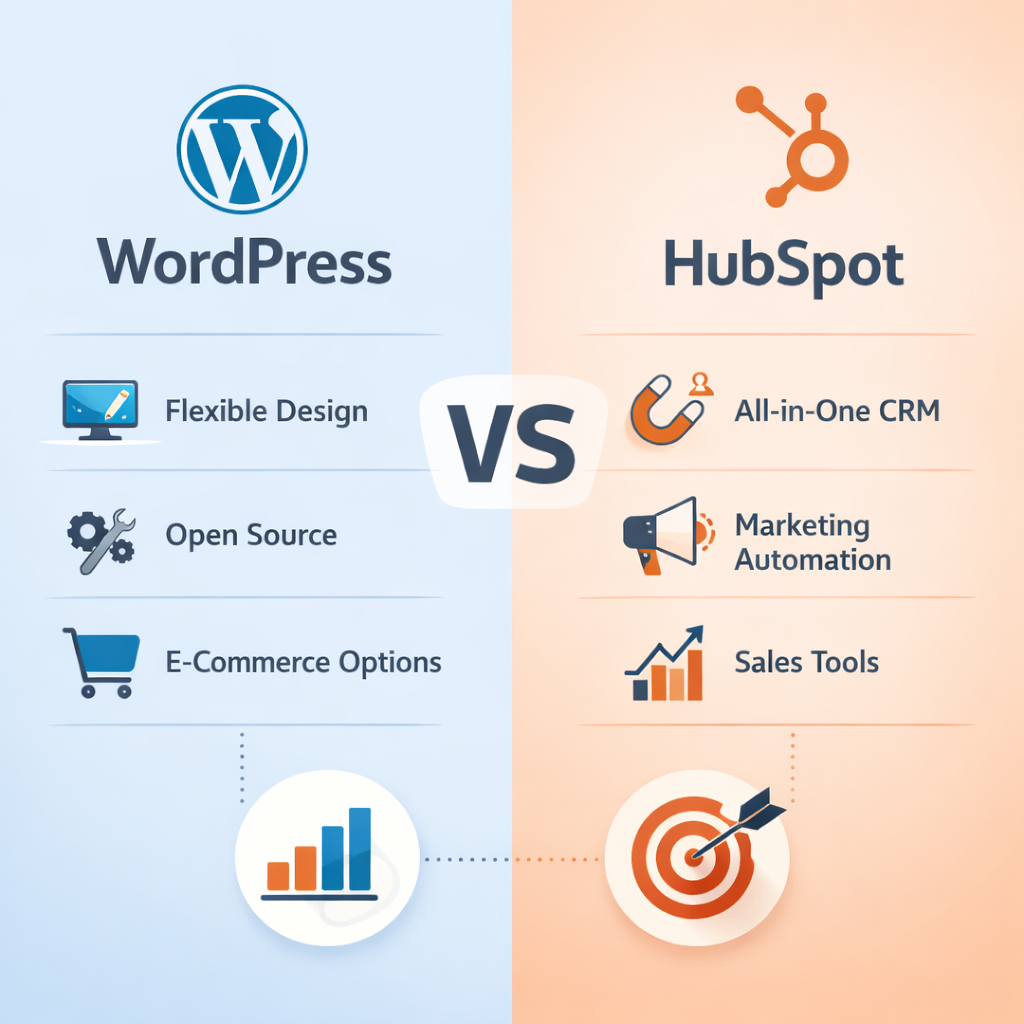
Choosing the right platform is one of the most important decisions when building or redesigning a website. WordPress and HubSpot are both popular solutions, but they offer very different approaches. Have you ever considered which one best fits your business?
This article explores the key differences between WordPress and HubSpot to help you make an informed decision.
WordPress: flexibility and full control
WordPress is an open-source CMS used worldwide, known for its flexibility and vast plugin ecosystem.
WordPress advantages:
-
High customization through plugins
-
Large community and support
-
Ideal for content-focused projects
-
Lower initial cost
WordPress challenges:
-
Security, updates, and backups require management
-
Marketing automation relies on third-party plugins
-
Integrations can be complex
HubSpot: an all-in-one ecosystem
HubSpot offers an integrated platform combining CMS, CRM, marketing, sales, and customer support.
HubSpot advantages:
-
Native CRM and automation tools
-
Built-in marketing, email, forms, and analytics
-
Strong security and performance
-
Ideal for inbound marketing strategies
HubSpot challenges:
SEO, performance, and digital marketing
WordPress SEO depends heavily on plugins, while HubSpot includes built-in SEO recommendations and reporting.
HubSpot also provides optimized hosting, CDN, and security by default, whereas WordPress performance depends on hosting providers and technical setup.
Which platform is right for your business?
-
WordPress suits blogs, editorial sites, and simple institutional websites.
-
HubSpot is ideal for companies focused on growth, automation, and data-driven marketing.
Conclusion
The choice between WordPress and HubSpot depends on your business goals, digital maturity, and growth strategy. Carefully evaluating current and future needs is key to making the right decision.